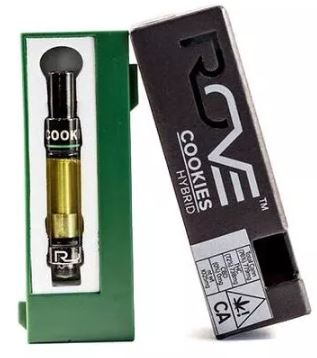
Rove Carts Explained: Research, Function, and Public-Health Awareness
What Are Rove Carts?
Rove Carts are pre-filled cartridges designed to hold and deliver liquid compounds with precision. While the term is commonly associated with consumer vaporization devices, in research and educational settings, Rove Carts are best understood as tools for scientific, pharmacological, and analytical study.
This article provides a neutral, educational overview of Rove Carts, covering their structure, research applications, technological relevance, and public-health considerations. It does not promote use, possession, or distribution.
Structure and Function
Rove Carts are designed with several key components:
-
Reservoir: Holds liquid compounds securely for controlled research or analysis
-
Delivery mechanism: Ensures precise and consistent release of compounds in experiments
-
Connectors or seals: Maintain containment and accuracy
In laboratory settings, these features allow researchers to:
-
Conduct chemical analysis with reproducible results
-
Safely handle volatile or sensitive liquids
-
Measure and study compound interactions accurately
The design of Rove Carts demonstrates the integration of engineering and chemistry in laboratory research tools.
Applications in Research
1. Pharmacology and Neuroscience
They are used in research to deliver liquid compounds under precise conditions, enabling studies on:
-
Cellular and molecular interactions
-
Pharmacodynamics and receptor activity
-
Effects on cognition or neural activity in controlled experiments
All research is conducted under strict professional supervision and ethical oversight.
2. Analytical Chemistry
In analytical chemistry, it facilitate precise measurement and delivery of liquid reagents. Applications include:
-
Studying evaporation or vaporization rates
-
Observing chemical stability and reactivity
-
Maintaining experimental reproducibility
These capabilities make Rove Carts valuable for accurate laboratory analysis.
3. Laboratory Training and Education
They are also used in educational laboratory settings to teach students:
-
Safe handling of liquid compounds
-
Accurate measurement and delivery techniques
-
Principles of experimental design and reproducibility
These educational applications emphasize research ethics, safety, and scientific literacy.
Safety and Public-Health Considerations
Even in professional research contexts, handling liquid compounds with Rove Carts carries potential risks:
-
Exposure to hazardous chemicals if mishandled
-
Inhalation or accidental ingestion risks
-
Environmental contamination if improperly disposed
Public-health education emphasizes:
-
Professional supervision is essential
-
Adherence to safety protocols and protective measures
-
Compliance with local regulations and institutional guidelines
It is critical that they are never used for unauthorized or recreational purposes.